
Preserving Jerusalem's Architectural Legacy: A 1930s Internationalist Style Apartment Renovation in Katamon
When a young Jerusalem family with four children first toured their future home, a 150-square-meter apartment on Rabbi Zeira Street in Katamon, you could immediately sense the space's potential. Flooded with natural light, one particular room seemed to call out for transformation. That sun-drenched space would become the heart of the home: the kitchen. This intuitive first impression became the guiding principle for a renovation that would honor the past while embracing the needs of contemporary family life.
A Testament to Jerusalem's Internationalist Heritage
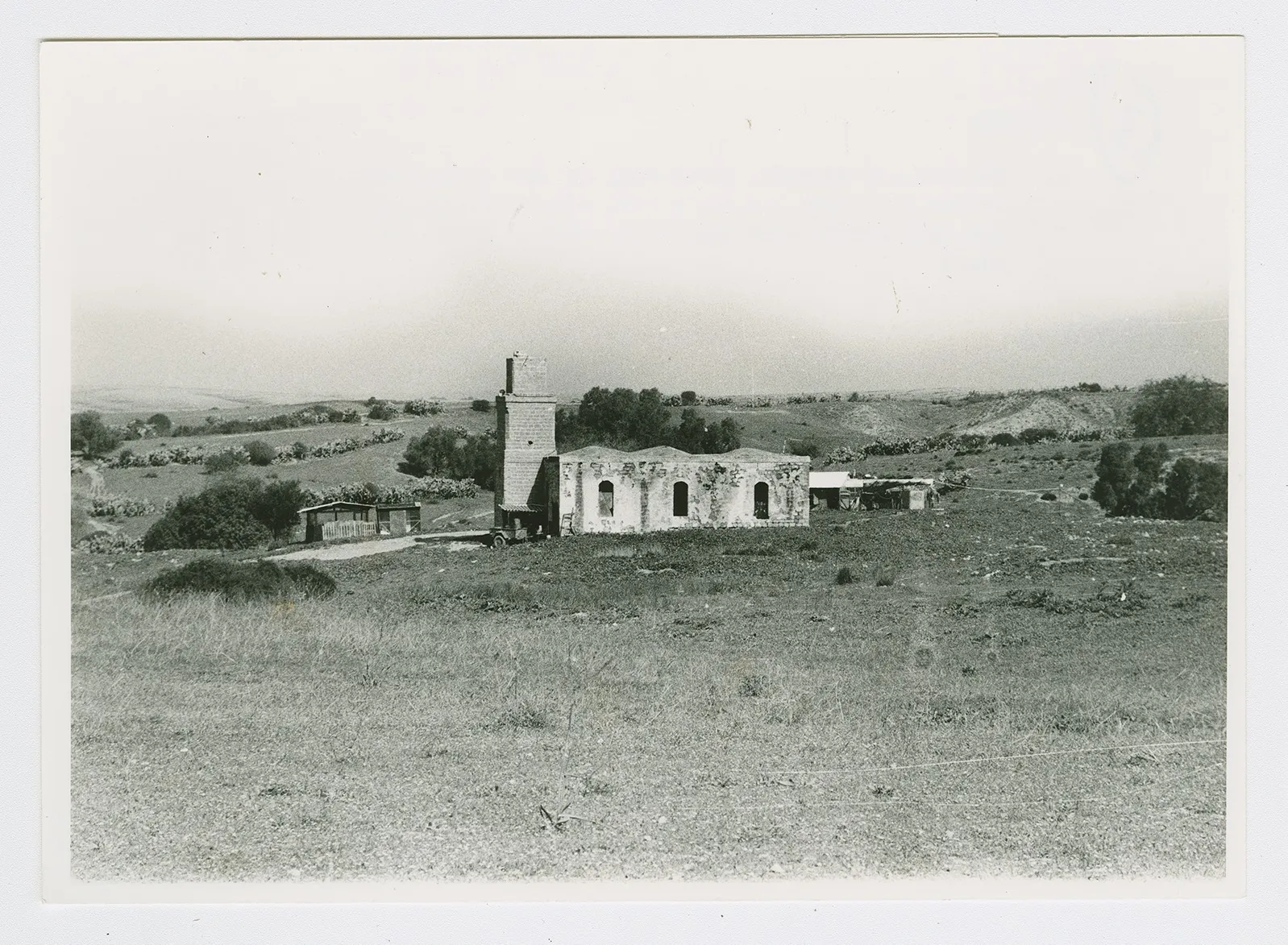
Built during the British Mandate period in the 1930s, this Katamon apartment embodies the Internationalist style, an architectural movement often confused with Bauhaus but distinct in its Jerusalem context. As you might explain to friends, it's like the difference between scotch whisky and whisky: "If it isn't from Scotland, it's not scotch." While influenced by Bauhaus principles, Jerusalem's Internationalist buildings developed their own character, shaped by local materials, climate, and cultural needs.
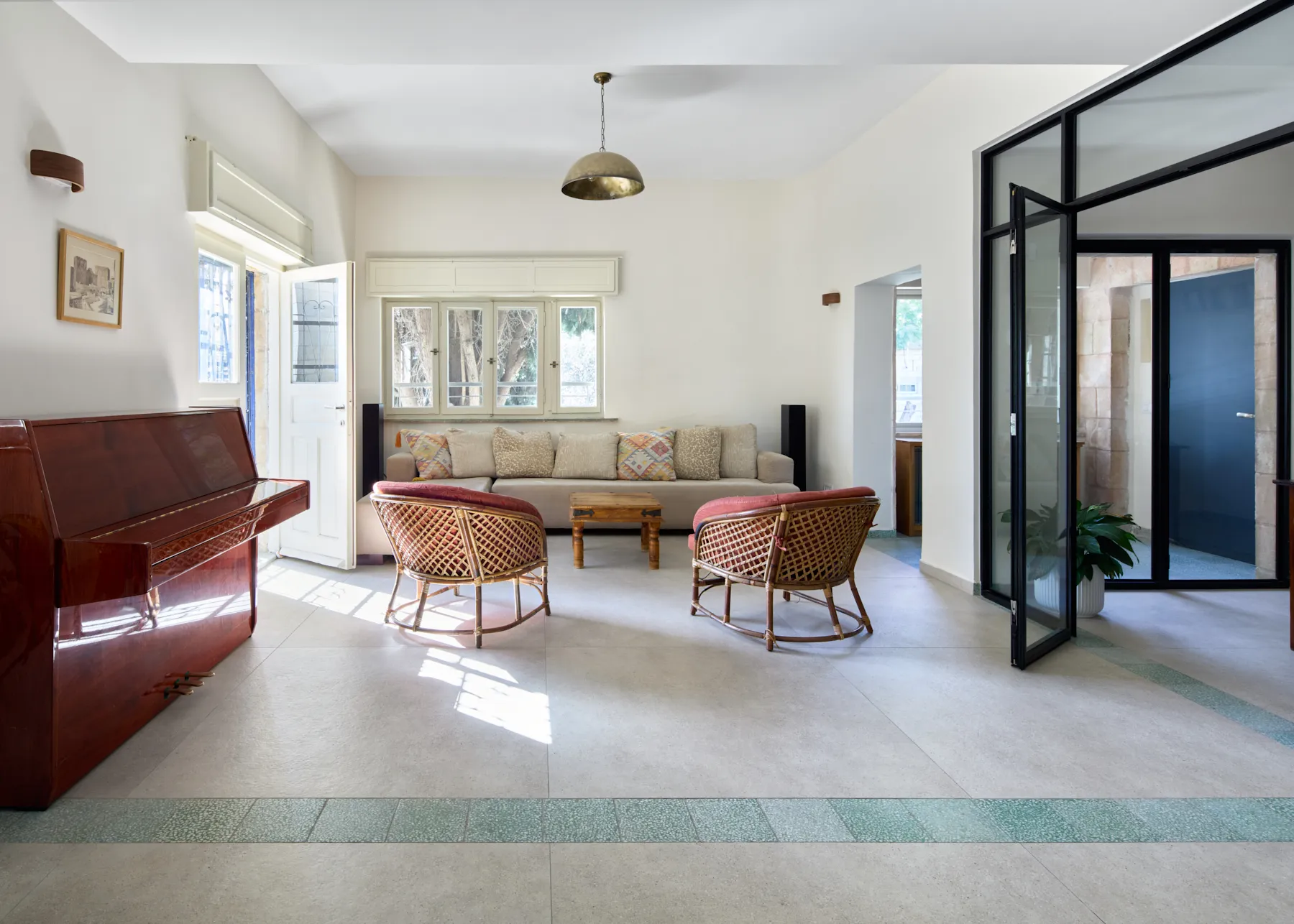
The building's architectural significance extends beyond its clean lines and functional design. The apartment originally featured a “beit chalal merkazi” (LIWAN), a central hall concept common in early 20th-century urban residences in the Levant. This multi-purpose entrance space served as a semi-public gathering area, not quite a living room nor a dining room, with private rooms radiating from this communal room.
A Family's Vision: Function Meets History
The clients, a religious couple, a doctor and psychologist with children ranging from ages three to thirteen, came to the project with clear priorities. They wanted functionality, natural light, open spaces, and a coherent layout that would create continuous flow throughout the apartment. But they also shared a passion for architectural heritage. They weren't interested in simply gutting a dated space and starting fresh; they wanted to understand the apartment's history and preserve its essential character.
This dual commitment to modern family living and historical preservation would define every decision throughout the six-month renovation process. The family's appreciation for mid-century modern design aligned beautifully with the building's Internationalist roots, creating a seamless bridge between eras.
The Art of Selective Preservation
Complete apartment renovations in Jerusalem's historic neighborhoods present unique challenges. Infrastructure needed updating, original materials required careful salvage, and every design decision had to balance aesthetic vision with practical budget constraints. Yet successful renovation goes beyond project management, as it requires understanding the building's history and finding creative solutions.
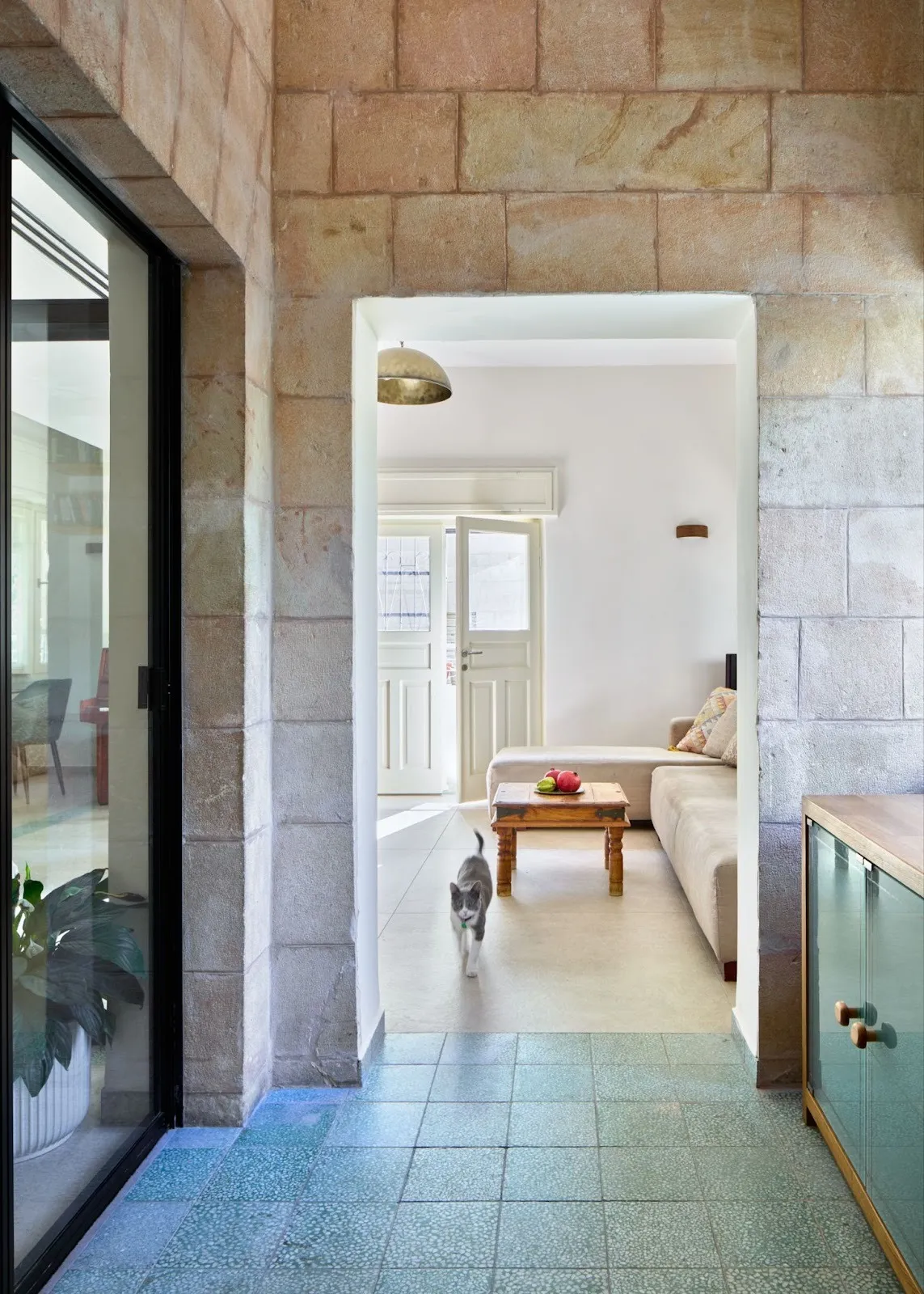
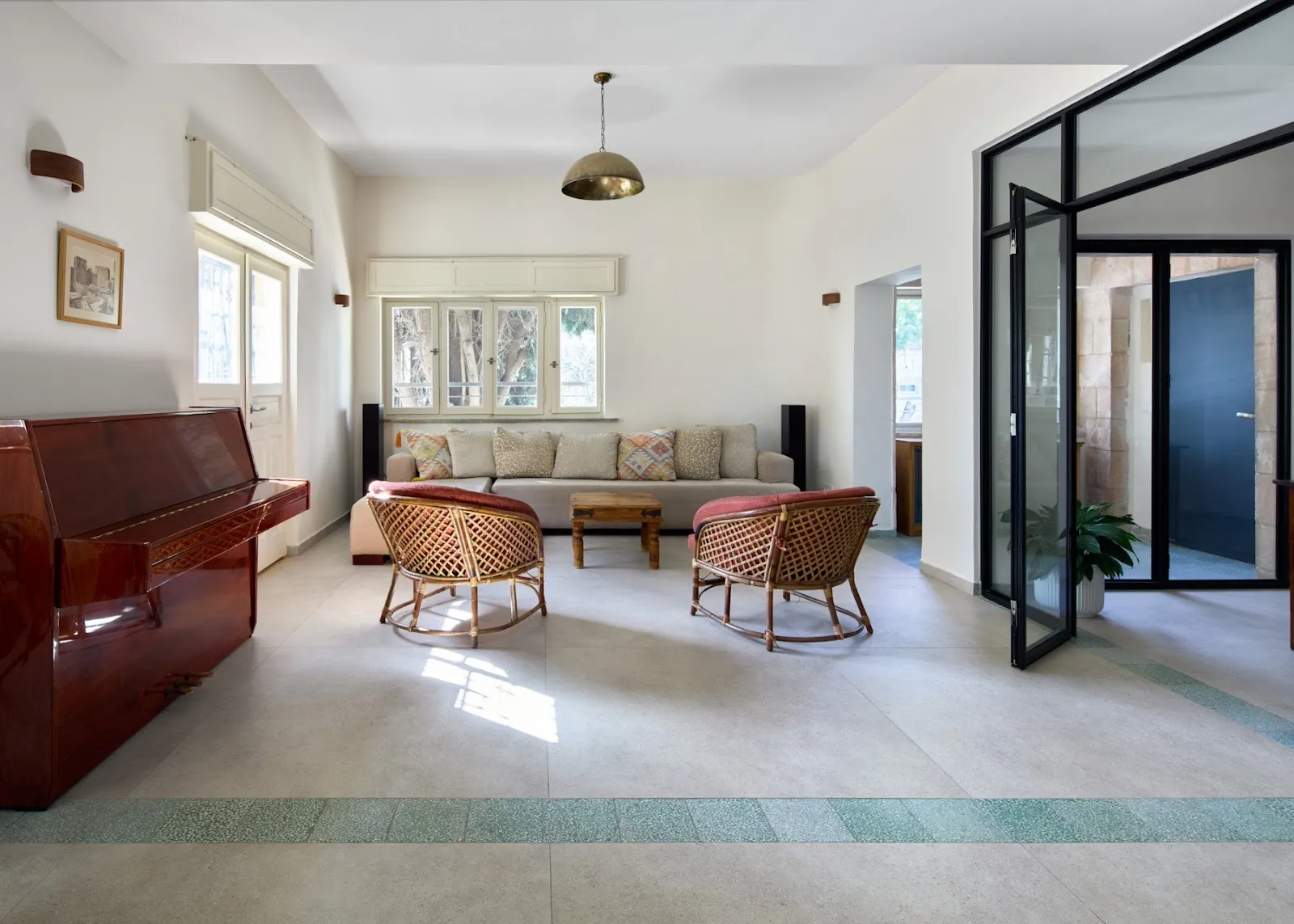
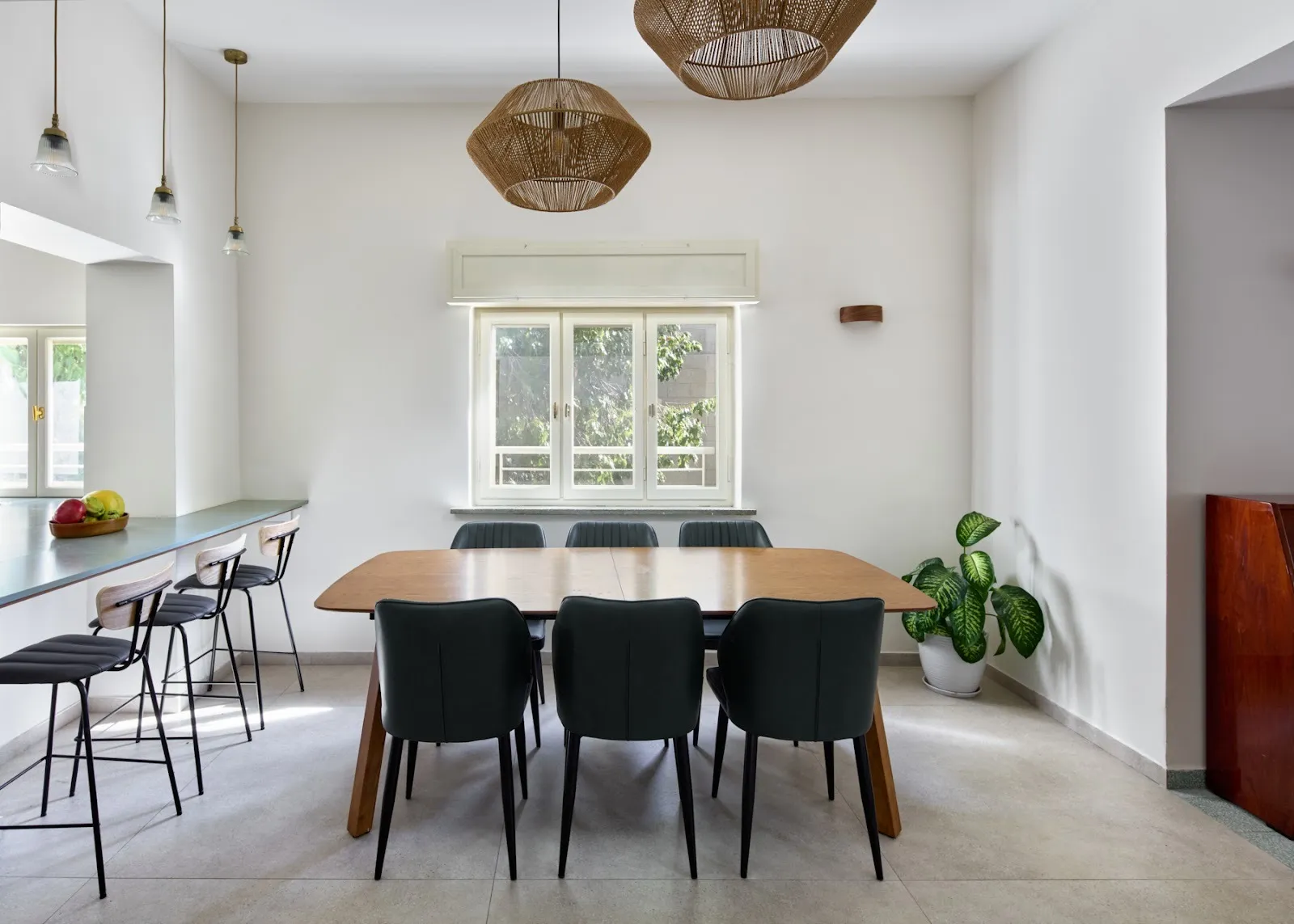
The apartment's original green terrazzo tiles became a case study in preservation. These 1930s floor tiles, with their distinctive color and craftsmanship, embodied the apartment's historical character. When underfloor heating was installed, a much desired feature to battle Jerusalem's winters, the tiles had to be carefully removed. Despite meticulous handling, only twenty percent survived intact. Rather than abandoning the material, these salvaged tiles were incorporated strategically throughout the apartment, used as transitional borders between rooms and in corridors connecting main spaces. What could have been a loss became an intentional design element, threading historical continuity through the modern layout.
Similarly, a 1930s bathroom sink was preserved and restored, standing as a functional artifact amid modern fixtures. All original interior and balcony doors and windows, the wooden carpentry that defines the apartment's character, underwent detailed restoration work. Each piece was cleaned, repainted, reglazed, and resealed. While this process proved more expensive than installing standard aluminum windows, the investment preserved irreplaceable architectural character.
Whatever was original, effort was made to preserve. This philosophy required constant oversight and hands-on involvement throughout construction, the kind of detailed attention that distinguishes thoughtful renovation from simple construction.
Designing for Light and Connection
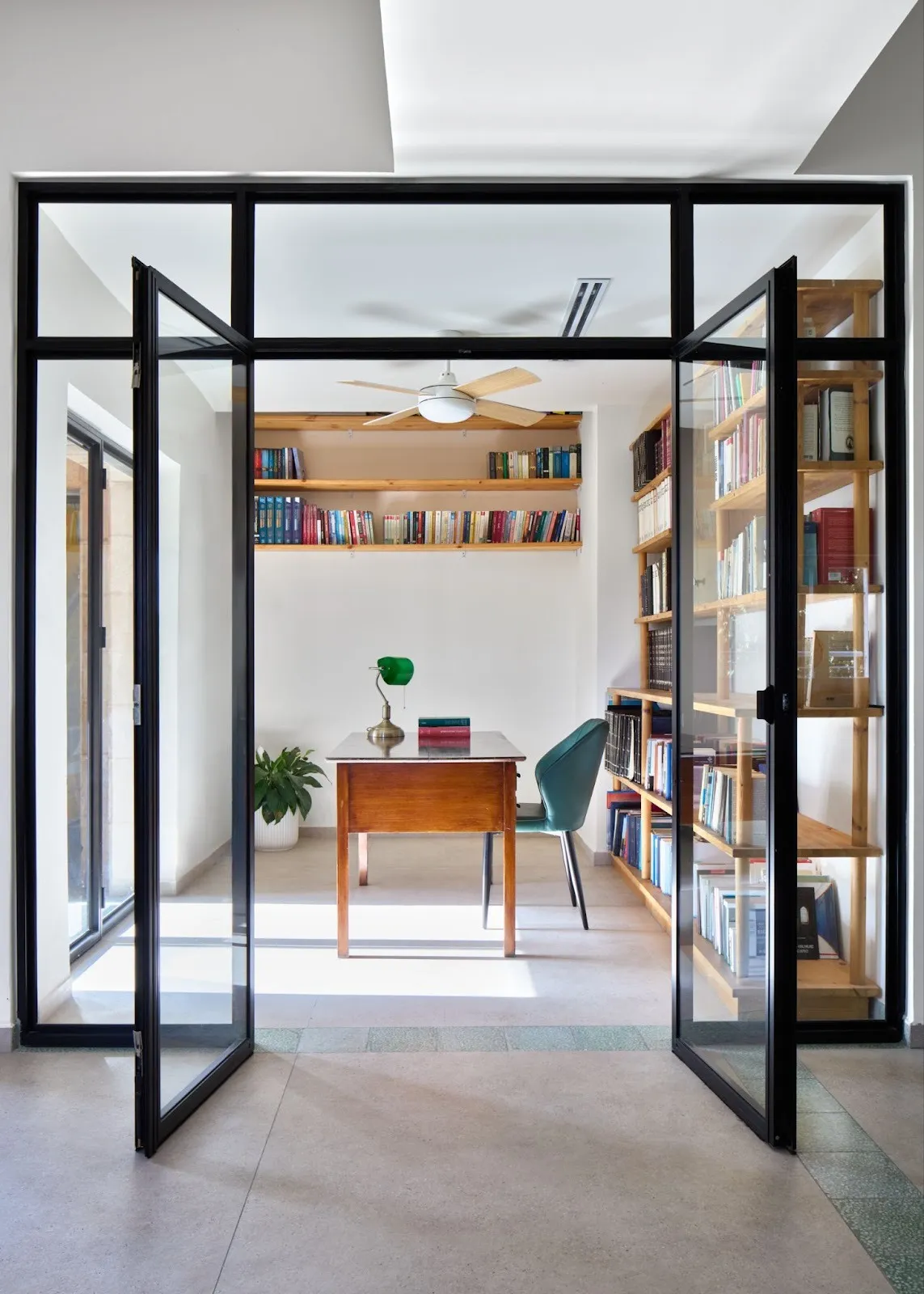
The renovation strategy honored the apartment's beit chalal merkazi concept by maintaining an open entrance as a shared, flexible space. But the design also addressed a modern family's need for privacy and quiet within an open plan. The solution: a glass-enclosed room off the main living area.
This transparent library and office space demonstrates sophisticated space planning for Jerusalem apartments. The glass walls allow natural light to flow freely throughout the apartment, while providing acoustic separation for focused work or study. The glass also creates a striking visual dialogue with the apartment's historic stone walls, emphasizing their texture and mass through contrast. It's a thoroughly contemporary intervention that somehow feels entirely appropriate to the building's 1930s character.
The kitchen, positioned in that originally intuitive sun-filled room, became the functional anchor envisioned from the first visit. By trusting that initial gut reaction and insisting on this placement throughout the design process, the final space captures something essential: the interplay of Jerusalem light with daily family life.
Project Management in Jerusalem's Historic Neighborhoods
Renovation projects in Jerusalem's older neighborhoods require specialized knowledge. While this interior renovation avoided the complex facade work that typically demands conservation permits and specialized contractors, it still required careful coordination of trades, continuous quality oversight, and creative problem-solving.
A hands-on approach that extends well beyond the planning phase proves essential. Active presence on-site, troubleshooting issues as they arise, and ensuring that design intent translates accurately into built reality. This level of engagement proves particularly crucial when working with historical materials that require constant supervision during installation.
The Lesson of Trusting Intuition
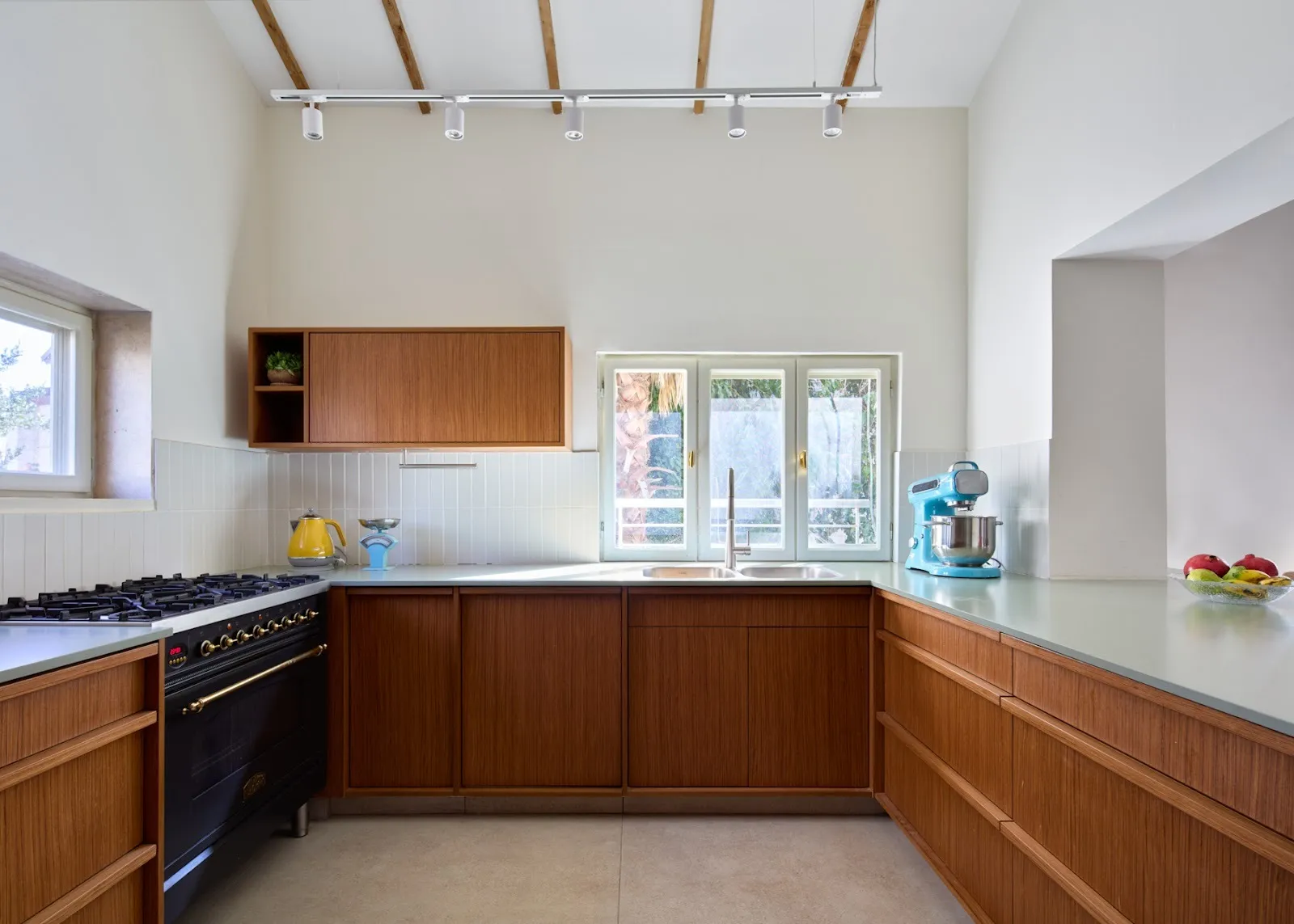
Every project teaches something new. This Katamon renovation reinforced the importance of intuition in design. That first impression of the apartment, the quality of light in what would become the kitchen, the potential in the worn terrazzo flooring, the character embedded in original carpentry, proved foundational to the project's success.
Your gut feeling is crucial. Going with that first perspective and insisting on preserving and reusing materials maintains character. This recognition comes from how trained architectural observation processes spatial relationships, light quality, material authenticity, and historical context all at once, often before you can fully articulate why something feels right.
A Model for Thoughtful Renovation in Jerusalem
The completed apartment demonstrates that renovation in Jerusalem's historic neighborhoods need not choose between preserving the past and serving contemporary needs. With careful planning, selective preservation, and design sensitivity, older buildings can be transformed into homes that honor their heritage while functioning beautifully for modern family life.
The project also proves that working within budget constraints doesn't preclude achieving sophisticated results. By making strategic decisions about where to invest, in restoring irreplaceable original elements like wooden windows, and where to economize, homeowners and architects can achieve transformations that feel both authentic and fresh.
For families considering renovation projects in Jerusalem's Mandate-era buildings, this Rabbi Zeira Street apartment offers valuable lessons. Seek an architect or interior designer who understands both historical context and contemporary needs. Be prepared for the detailed oversight that preservation requires. Trust the intuitive responses to a space that often reveal its essential character. And remain open to creative solutions that transform constraints, like salvaged tile fragments, into distinctive design elements.
In Jerusalem's historic neighborhoods, renovation requires respecting and preserving what came before. This work on the Katamon apartment highlights how thoughtful intervention can refresh historic spaces while respecting the architectural legacy that makes Jerusalem's neighborhoods irreplaceable. The result is a home that feels simultaneously rooted in its 1930s origins and perfectly suited to 21st-century family life - proof that the best design bridges time rather than erasing it.
Project Details:
- Location: Rabbi Zeira Street, Katamon, Jerusalem
- Type: Full-floor apartment renovation
- Size: 150 square meters
- Period: British Mandate, 1930s Internationalist Style
- Duration: 6 months
- Completion: 2025
- Architecture & Interior Design: Shaya Roth, Shaya Roth Architecture
- Photography: Michael Tikva